
Quick answer
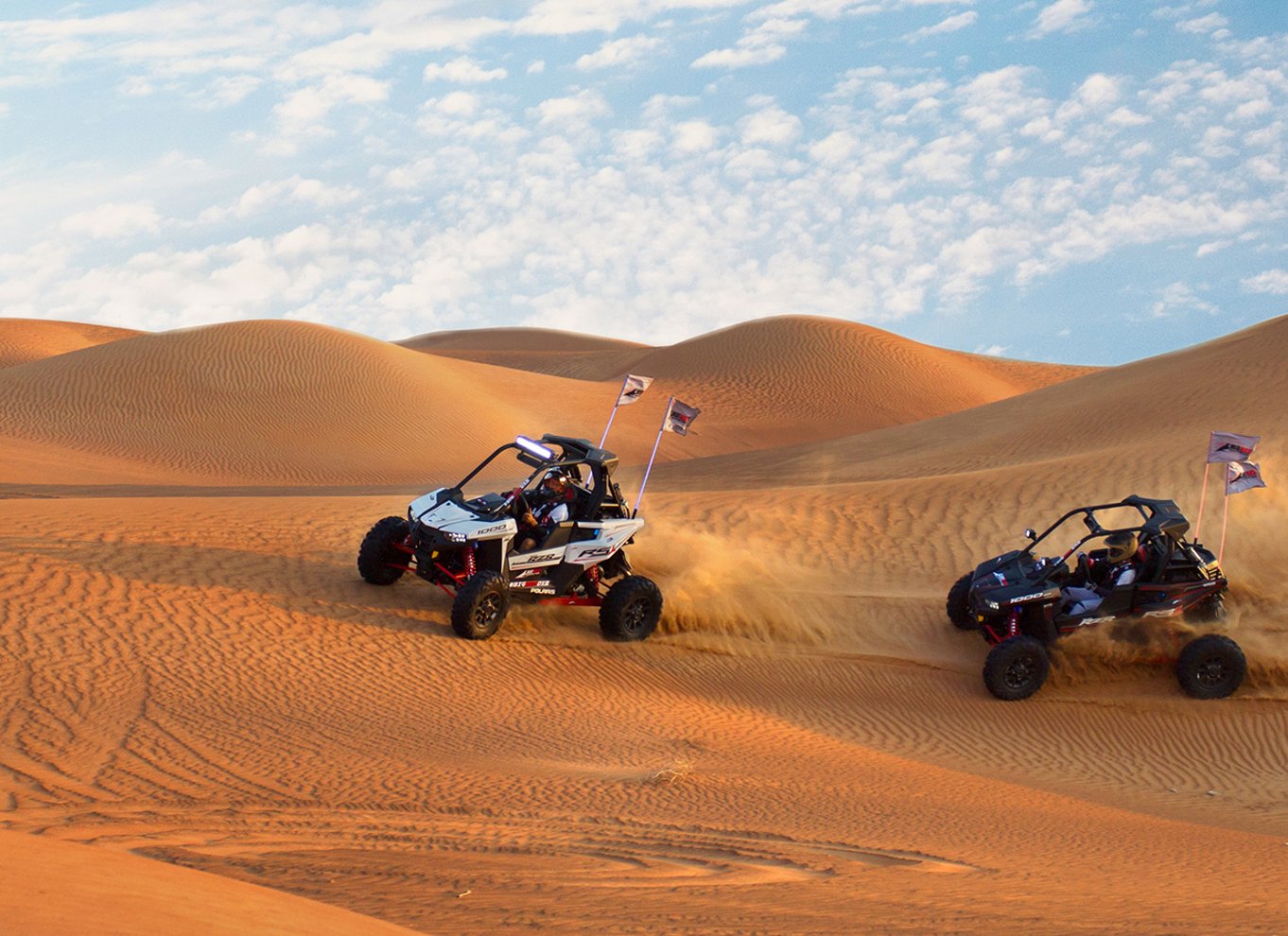
The best desert buggy Dubai photos are shot between 15:30 and 17:30, when softer light sculpts dune contours and cooler temperatures keep dust suspension dramatic without haze. Position yourself on the windward side of a tall dune with the buggy ascending toward you—backlit rooster tails and side-lit tire spray become your foreground interest. A shutter speed above 1/1000s freezes motion; wider apertures (f/2.8–f/5.6) isolate the vehicle against the vastness.
The Dubai Desert Conservation Reserve spans 225 square kilometers of rippled dunes, gravel plains, and compacted corridors where buggies carve arcs visible from a kilometer away. Unlike beach or forest trails, desert terrain offers zero shade and unbroken sightlines—every plume of sand, every banking turn, and every rooster tail becomes a compositional element you can predict and frame. Desert buggy photography Dubai rewards preparation over spontaneity. The angle of sunlight transforms dune texture: midday flattens everything into white glare, but late-afternoon rays rake across ridges and cast long shadows that give depth to otherwise featureless slopes. Dust hangs longer in still air, so shooting during the cooler pre-sunset window means particles stay suspended without the shimmer that ruins sharpness. Tour operators running buggy experiences in the Conservation Reserve typically stage runs along established trails where firm sand and predictable topography let you plant a tripod or shoot handheld without sinking. Composition begins with dune geometry. A buggy climbing the face of a sixty-meter dune creates natural leading lines; positioning yourself halfway up the opposite slope puts the vehicle against clean sky rather than cluttered horizon. Shoot in burst mode—most buggies hit 80 km/h on straightaways, and a three-frame sequence often yields one sharp hero shot. Protect your sensor: sand infiltrates even weather-sealed bodies, so bring lens wipes, a rocket blower, and a UV filter you can sacrifice. The reserve operates around the clock, but practical light for photography concentrates in the two hours before sunset, when contrast softens and color temperature shifts toward amber. Access routes vary by operator, but all converge on the Al Ain Road corridor east of the city. Many tours include a photo stop at a high-dune overlook; if you're shooting independently, confirm vehicle permits and route clearance with reserve management. Cellular coverage extends across most of the northern reserve, so geotagging and cloud backup work in real time. The landscape looks infinite, but good vantage points cluster near trail intersections where multiple buggies converge and dune height exceeds forty meters.
“Late-afternoon light doesn't just improve desert buggy Dubai photos—it defines them, turning flat sand into sculptural relief and airborne dust into backlit texture.”
Best Time for Desert Buggy Dubai Photos
The 15:30–17:30 arrival window works year-round because the sun sits low enough to soften shadows across the dunes and temperatures drop off the midday peak, which matters most from May to September when daytime heat otherwise flattens contrast in photos.
November to March
Moderate, more day-trippersCooler, 15–25°C, low haze
Winter light stays clear through the afternoon, so the 15:30–17:30 window renders sharp dune ridgelines and deep blue skies with minimal atmospheric dust.
May to September
Lighter at late afternoonHot, 35–45°C, hazier air
Heat haze builds through midday and can soften distant detail, so arriving at 15:30 avoids the worst shimmer while still catching golden-hour tones near 17:30.
April and October
Lower, shoulder-season lullWarm, 25–35°C, clearer skies
These transition months pair comfortable temperatures with cleaner air than peak summer, giving the 15:30–17:30 slot consistently sharp color and contrast.
Weekday afternoons
Fewer groups on the sand—
Fewer vehicles crossing the frame make it easier to time shots between passing buggies, an advantage that holds across all seasons.
Weekend afternoons
Busier, more overlapping tour groups—
Higher visitor volume in the same 15:30–17:30 window means more waiting for clear sightlines, though the light quality itself is unchanged.
Verdict: For the sharpest, least hazy images, aim for a weekday arrival between 15:30 and 17:30 in April or October.
Getting to the Desert Buggy Dubai Photos Location
Dubai Desert Conservation Reserve lies along Al Ain Road, southeast of the city, with no standalone entrance gate for the public. Access runs entirely through tour operator pickup or self-drive arrival at a designated operator meeting point inside the reserve.
Al Ain Road (E66) south from Dubai to the signed DDCR turn-off
Metered taxi from central Dubai (e.g. Downtown or Marina) via E66
None — reserve has no pedestrian or public entry point
Self-drive to operator's designated meeting point (confirm exact GPS pin at booking)
Tips for Better Desert Buggy Dubai Photos
Fine dune sand and fast-moving buggies create specific camera problems that differ from typical outdoor shooting, so a few gear adjustments make the difference between usable shots and grit-damaged equipment.
Seal your gear before dust hits
Wind-blown sand infiltrates zoom lens gaps and phone charging ports within minutes on a moving buggy, so keep cameras in a ziplock bag or rain cover between shots and only unbag them to shoot. A lens cloth alone will not remove sand without scratching the coating, so blow off grains with a puffer brush first.
Shutter speed for buggy motion
Set shutter speed to at least 1/1000s to freeze a buggy kicking up sand, or drop to 1/60s while panning alongside it to blur the wheels and background dunes for a sense of speed. Auto mode on most phones defaults too slow for this contrast light, so switch to a sport or pro shutter setting manually.
Skip the phone case grip
Sand works into textured phone cases and grip mounts, so wipe the case down before pocketing the phone rather than after, since sand already inside will scratch the screen on the next handling. A slim case with no exposed seams is easier to clear fully than a rugged case.
Color choices against dunes
Solid warm tones like burnt orange, deep red, or white read cleanly against beige sand, while khaki or tan clothing blends into the background and disappears in photos. Avoid busy patterns since the dune texture already fills the frame.
Group shots need a spotter
With multiple buggies moving, assign one rider to stay still as a foreground anchor while others circle behind for depth, since group photos shot with everyone in motion tend to lose a clear subject. Call out the shot in advance so drivers know to hold position for a few seconds.
Protect lenses during transfers
Getting in and out of the buggy is when sand transfers most heavily onto lenses via hands and straps, so change lenses or wipe glass only inside the vehicle cabin, not while standing on open sand. A rear lens cap on a spare lens prevents grit from settling on the mount contacts.
Backup power matters more here
Cold mornings and hot afternoons both drain battery faster, and there are no shops nearby to buy a replacement, so carry a second battery or power bank in an insulated pouch rather than relying on one charge.
Dos and Donts for Desert Buggy Dubai Photos
The Dubai Desert Conservation Reserve enforces strict protocols to protect fragile ecosystems and wildlife. Following these rules ensures safe photography while preserving the environment for future visitors.
Do
- Stay on designated tracks and paths during photo stops
- Keep a respectful distance from wildlife; use zoom lenses instead
- Wear sunscreen and a hat when stepping out for shots
- Wait your turn if another group is photographing the same vista
- Pack out all litter including lens wipes and water bottles
- Follow your guide's instructions on where to stop safely
Don't
- Don't fly drones without explicit reserve authority permission
- Don't trample vegetation or disturb sand formations for composition
- Don't chase or feed animals to get closer shots
- Don't block other buggies' paths while framing your photo
- Don't leave the vehicle in prohibited zones or near nesting areas
- Don't use flash photography on wildlife at close range
Desert Buggy Dubai Photos: Opening Hours
The Dubai Desert Conservation Reserve itself has no gate or closing time, it is accessible around the clock every day, with no standalone entrance fee. Buggy tours and their photo sessions run on schedules set by individual operators, not the reserve.
| Monday | 00:00 – 23:59 | Reserve access only, no gate fee |
|---|---|---|
| Tuesday | 00:00 – 23:59 | Reserve access only, no gate fee |
| Wednesday | 00:00 – 23:59 | Reserve access only, no gate fee |
| Thursday | 00:00 – 23:59 | Reserve access only, no gate fee |
| Friday | 00:00 – 23:59 | Reserve access only, no gate fee |
| Saturday | 00:00 – 23:59 | Reserve access only, no gate fee |
| Sunday | 00:00 – 23:59 | Reserve access only, no gate fee |
Pre-Visit Checklist for Desert Buggy Dubai Photos
A short prep list to help you capture the best desert buggy shots without delays or equipment issues.
-
Book your buggy tour in advance — Reserve operators manage group sizes and equipment, and slots fill quickly during cooler months.
-
Charge camera batteries and phone fully — The desert offers no charging points, and a full day of shooting drains power fast.
-
Pack lens wipes and a dust cover — Fine sand penetrates camera bodies and coats glass during buggy movement and wind gusts.
-
Arrive between 15:30 and 17:30 — This window delivers softer light for photos and cooler temperatures before sunset.
-
Wear neutral, earth-toned clothing — Bright colors clash with the landscape in photos, while loose fabric catches wind and sand.
-
Bring a secure camera strap or bag — Buggy vibration and sudden stops can jostle handheld gear, and replacing equipment in the desert is impossible.
Check availability
FAQ: Desert Buggy Dubai Photos
Everything you need to know about desert buggy dubai photos